
A Little Backstory
Farming conjures up images of massive tractors lumbering across wide fields, leaving ruts in their wake and shaking the ground as they go. Large tractors certainly have their place in the industry and on farms of all sizes. However, when working on small or even micro operations, tractors of corresponding size can prove invaluable. In some situations, a class 2 or even class 1 tractor can simply prove to be too wide, unmaneuverable, or heavy.
Around our farm, we have some heavy-duty tractors, as well as a hydrostatic Simplicity Broadmoore riding mower. All of these saw regular use in the past, but over time, I began to see a need for something that sat between a class 1 and a typical riding mower. As I surfed Google and perused Facebook Marketplace (where else?) I discovered there are a couple of options for filling that niche. The first and perhaps best option was that of the class 0 tractor. Class 0s are basically mini tractors. They often feature diesel engines, 4×4, an appropriately sized 3-point hitch setup, and matching implements. Put on a set of ag tires and chains, and they’re basically little tanks, ready to carry you wherever your heart desires. They sound great! I’ve never had one. Unfortunately, all that utility often comes with a decent price tag, even decades-old used examples.
If you’re like me and crave practicality but are too cheap to pay for it, have no fear. There’s another option: the garden/lawn tractor. In the days of yesteryear, it was common for manufacturers of riding mowers to offer beefed-up versions of their machines. These came with stout frames, PTOs, attachments, and even hydraulics in some cases. The downsides of garden tractors include their generally being 2-wheel drive and the lack of the convenient 3-point hitch. However, today they are plentiful, affordable, and still quite a bit more capable than a standard riding mower.
Finding The Perfect Deal
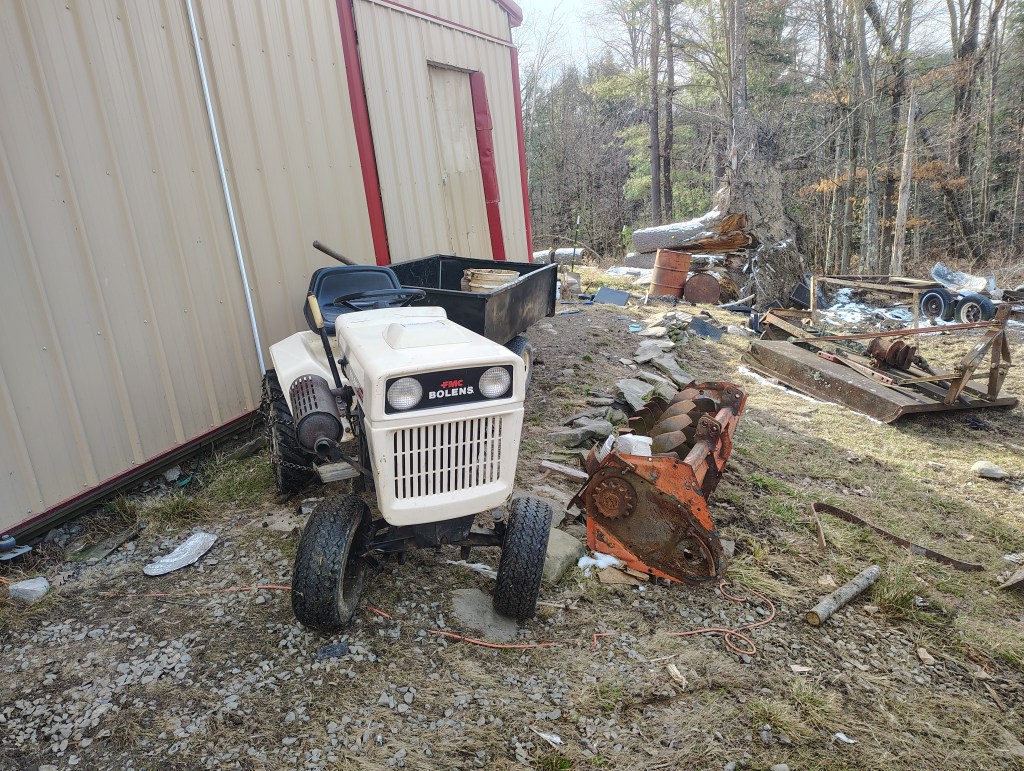
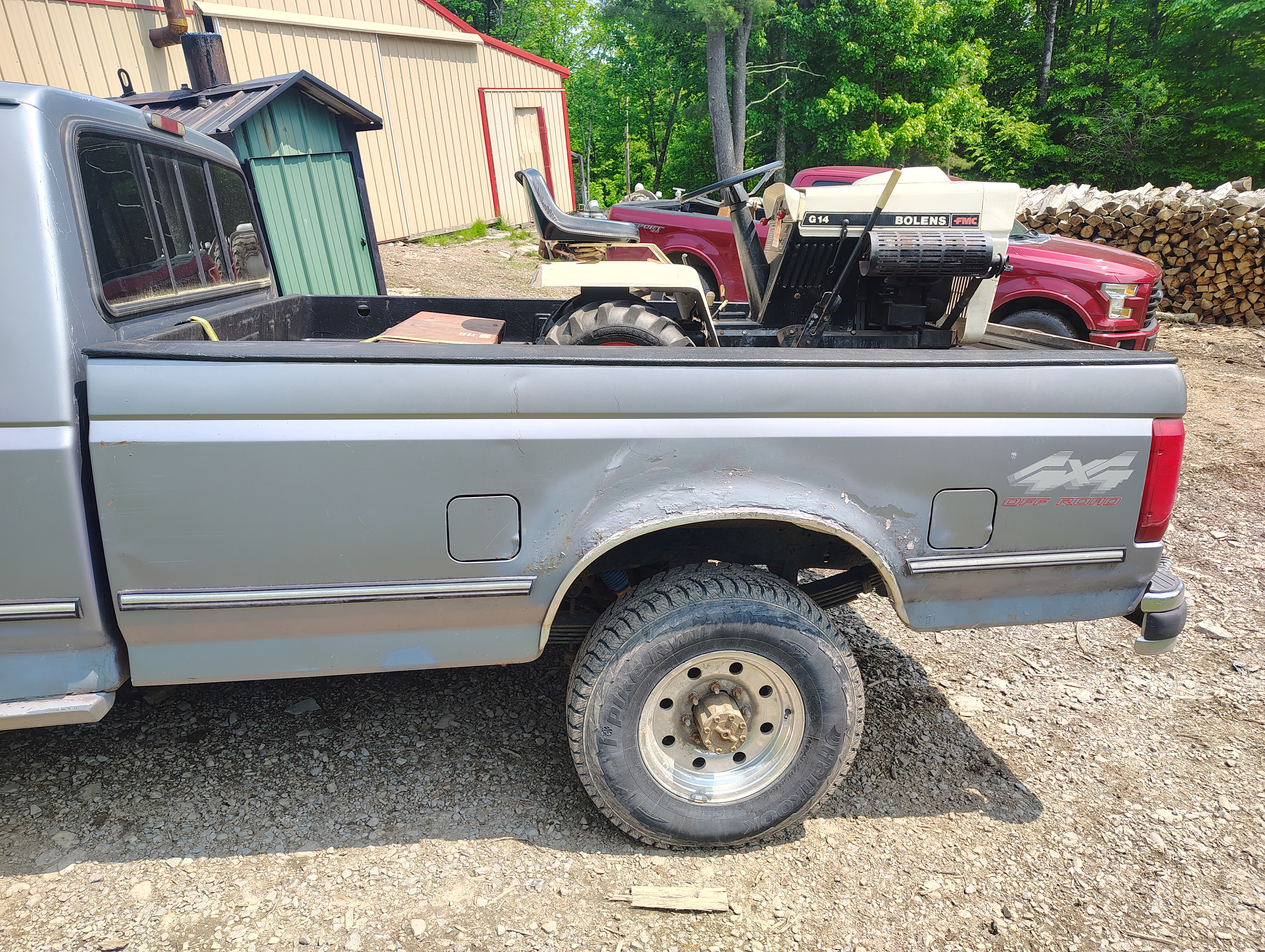
So, after some searching, I eventually settled on a listing an hour or so south of my house. For sale was a Bolens G-14, classified as a ‘tube frame’ tractor. Made in the 1970s, the gas-powered tube frames have a loyal following. They boast a reputation for being durable and versatile, with a wide array of available attachments. This particular example came with a mower deck, plow, snow blower, and rototiller, plus a set of tire chains. So I made the trip down there with two pickup trucks in tow. The seller was friendly and helpful. He allowed me to test ride the tractor and was upfront about an oil leak coming from the differential. The seller even lent us a set of ramps to load the tractor into the back of my pickup. In short time, we had everything loaded and strapped down for a slow journey home.
Attachtments
Delaying only long enough for a tune-up (fresh oil, spark plug, air filter), our new acquisition was quickly pressed into service. At the time, our primary riding mower was down, and we were anxious to use the Bolens’ deck in the meantime. As it turned out, the deck had other plans. The deck probably came on and off half a dozen times with only a small patch of lawn to show for it each time. First, the old belt broke- not really a big surprise. Then the tensioner pulley was discovered to be bad. Then the idler pulley seized. We changed both the pulleys and smoked our third or fourth belt due to one of the pulley bolts being too tight.
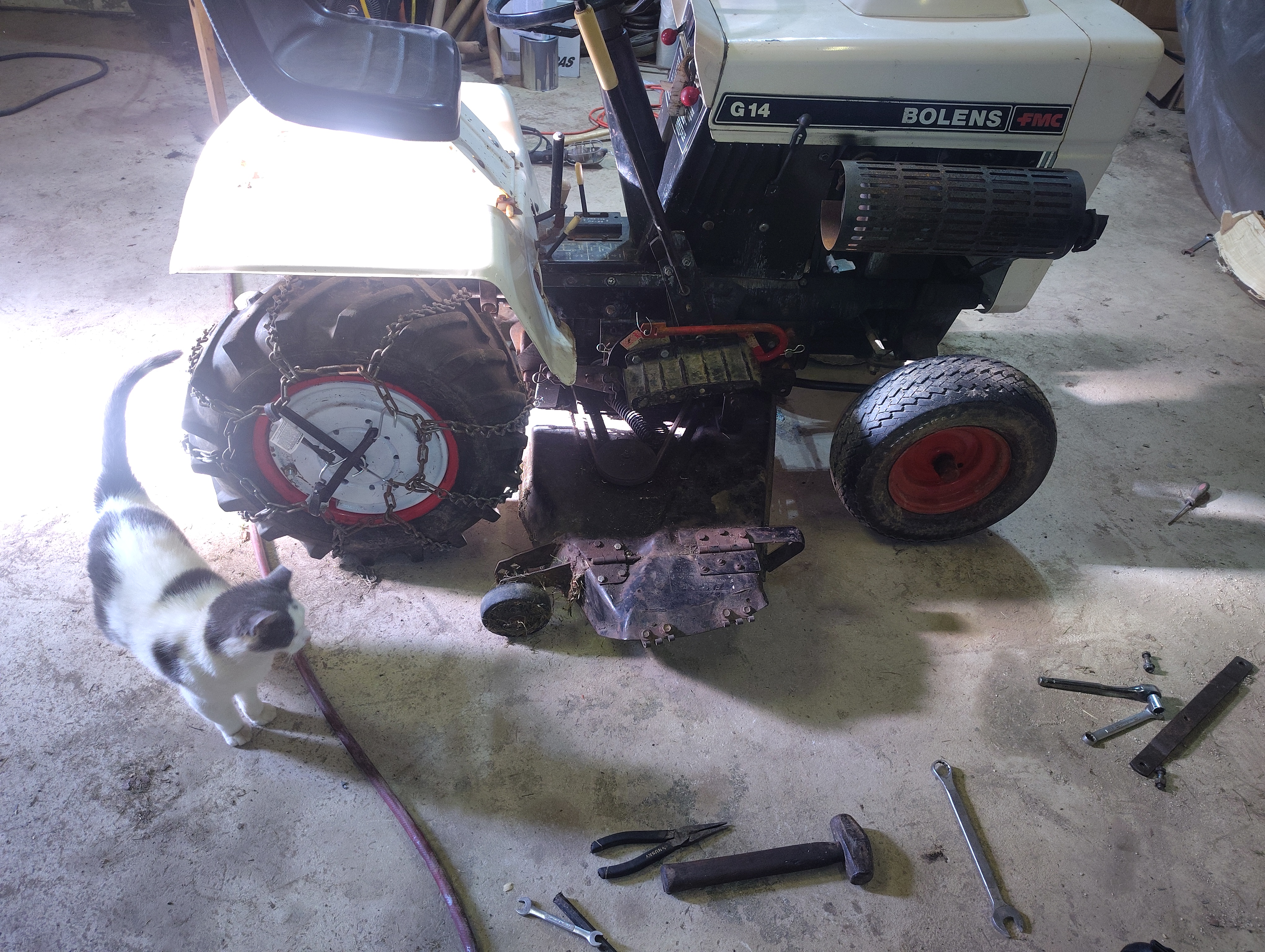
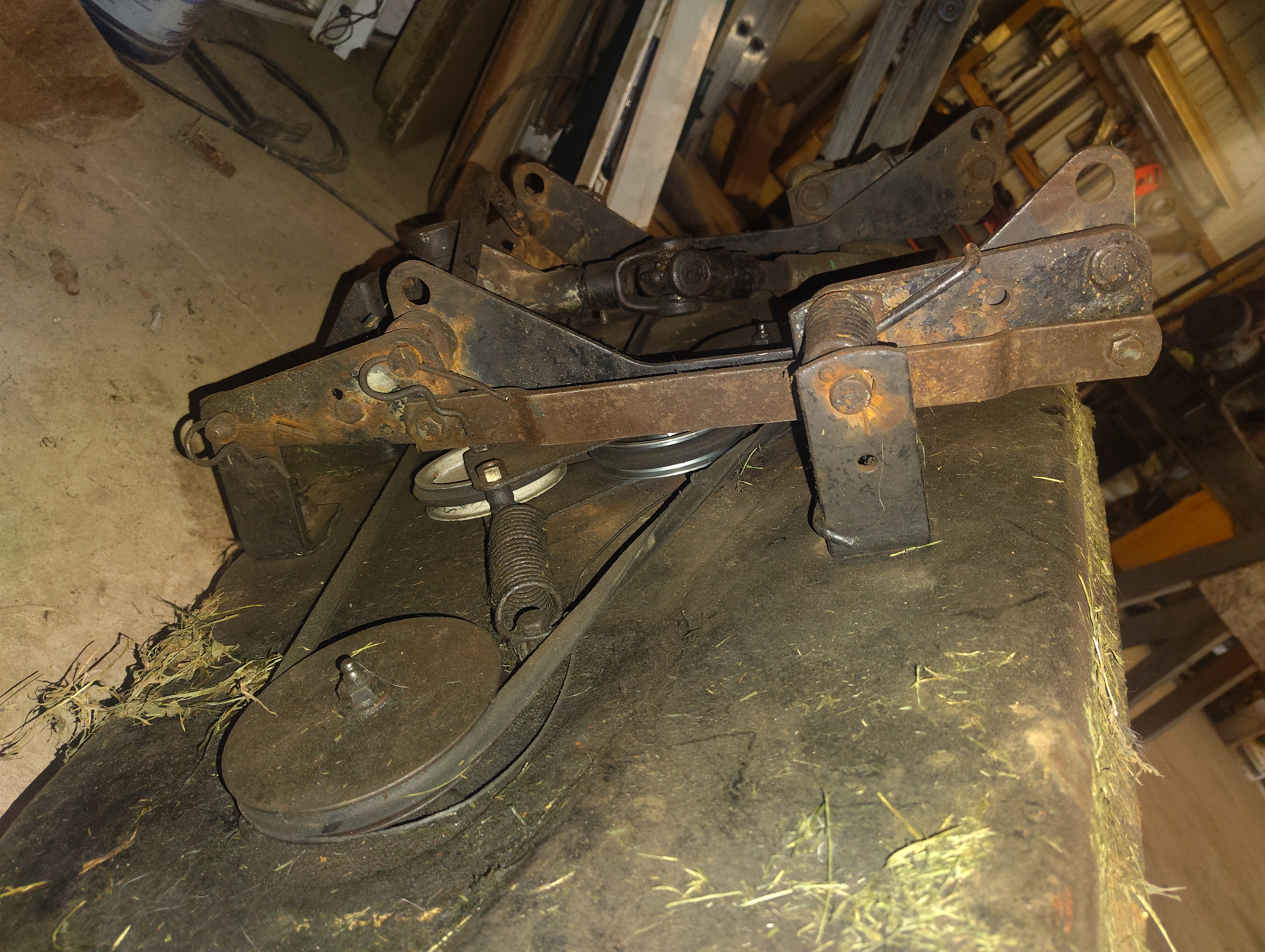
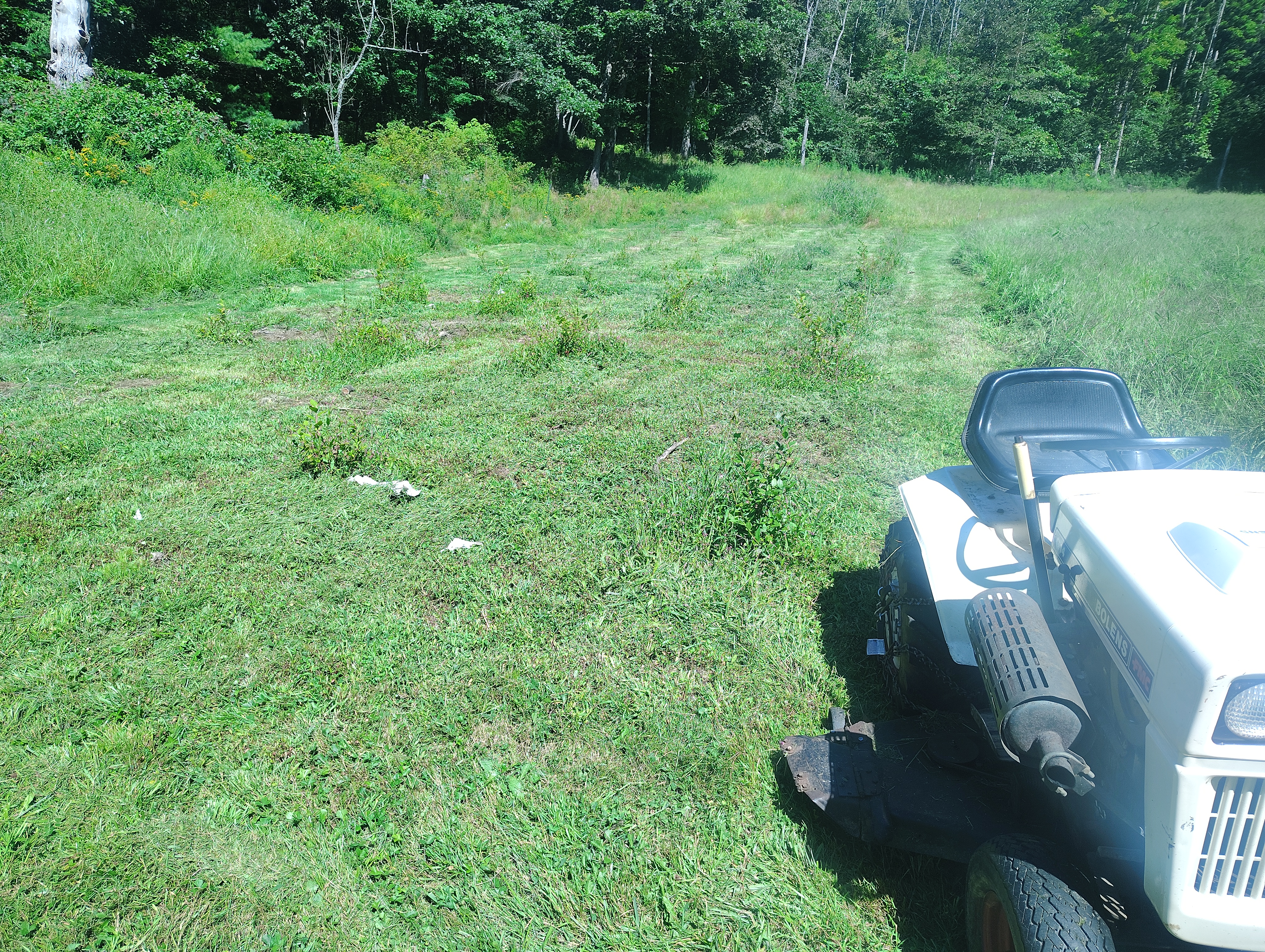
I eventually came to realize that some spacers were missing, which were necessary to keep the pulleys loose and at the proper height. I spent most of a weekend experimenting with different combinations of washers until I finally came across the magic number. By that time, of course, the regular riding mower had been fixed. However, I still enjoyed a triumphant mowing trip around the blueberry orchard late in the summer.
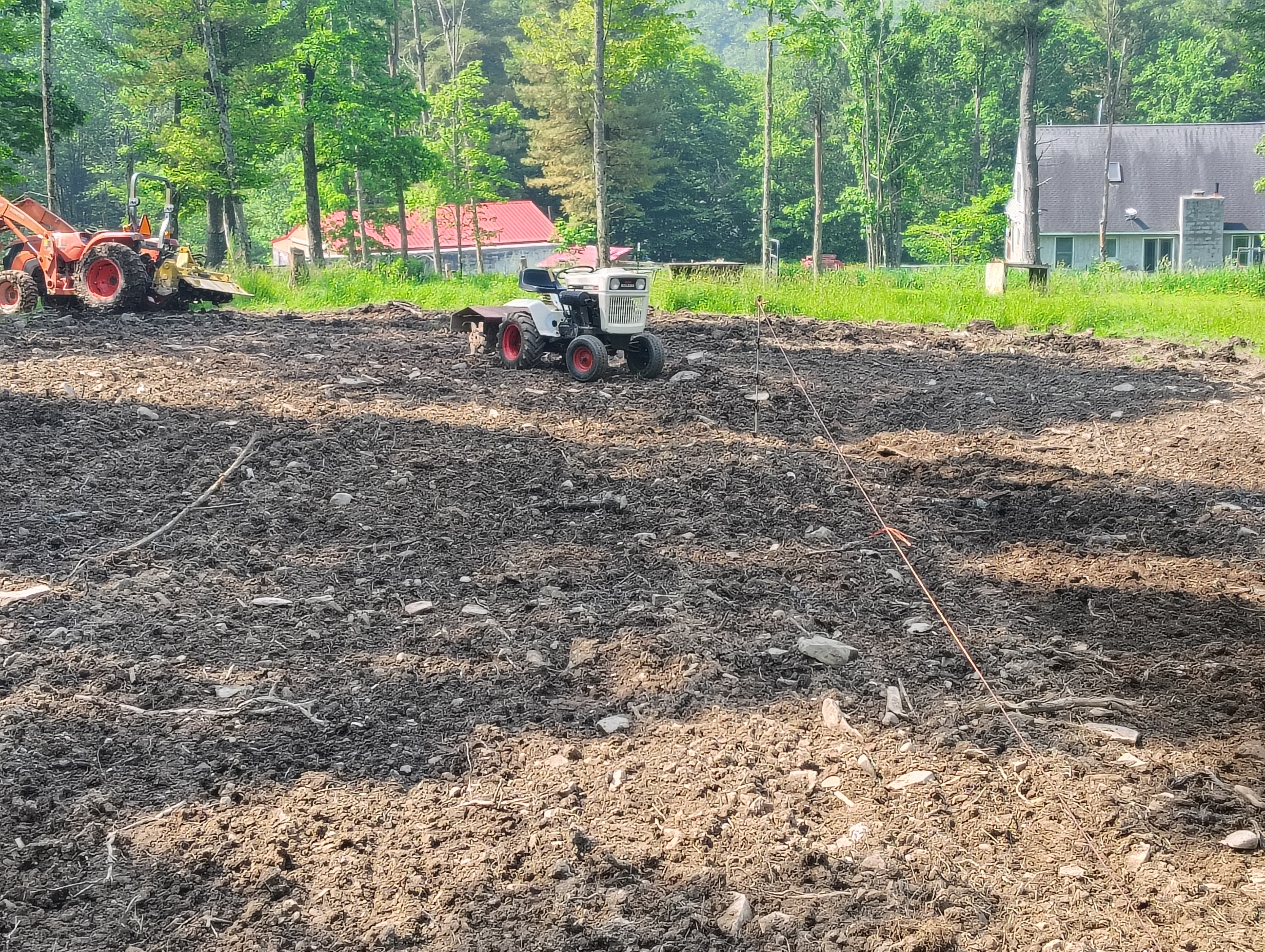
My experience with the tiller proved to be more productive. On the downside, the 40-some odd year old tiller was as solid as it was heavy; attaching the tiller was not for the faint of heart. On the upside, being heavy and well built meant it was up to the task of working in our rocky soil. The Bolens had its own hitching system, which was fixed where it attached to the frame. A 3-point hitch would allow one to move the hitch up or down to match the attachment’s elevation. For hooking up my tiller, it was necessary to block up the gearbox in order to raise the tiller to meet the tractor. If you ever do succeed in lining up all the proper holes, then a series of clevis pins and cotter pins are employed to mate the two pieces of equipment.
After topping up the gear oil on the tiller, I took it up the pumpkin patch to experiment. My particular G-14 did not have a hydraulic-assisted lift system—anymore. There’s evidence of where the lift cylinder would have once been mounted, but a previous owner removed it. So that left me with the manual lift handle, which worked… okay. There was a button on top of the handle that needed to be depressed before the handle could be moved. Said button could not be pressed until the handle was pulled on hard enough to take the weight of the tiller off the lift system. Easier said than done. Wrangling the lift handle aside, once I finally got the tines in the soil, I was pleased. The small tractor-tiller combo did a surprisingly good job of ripping up the dirt and creating a nice soft stretch in which to make my pumpkin hills. Wherever the tiller found rocks (everywhere), it competently, if not gently, kicked them out of the way. In conclusion, it was a bumpy ride and a good arm workout, but worth it.
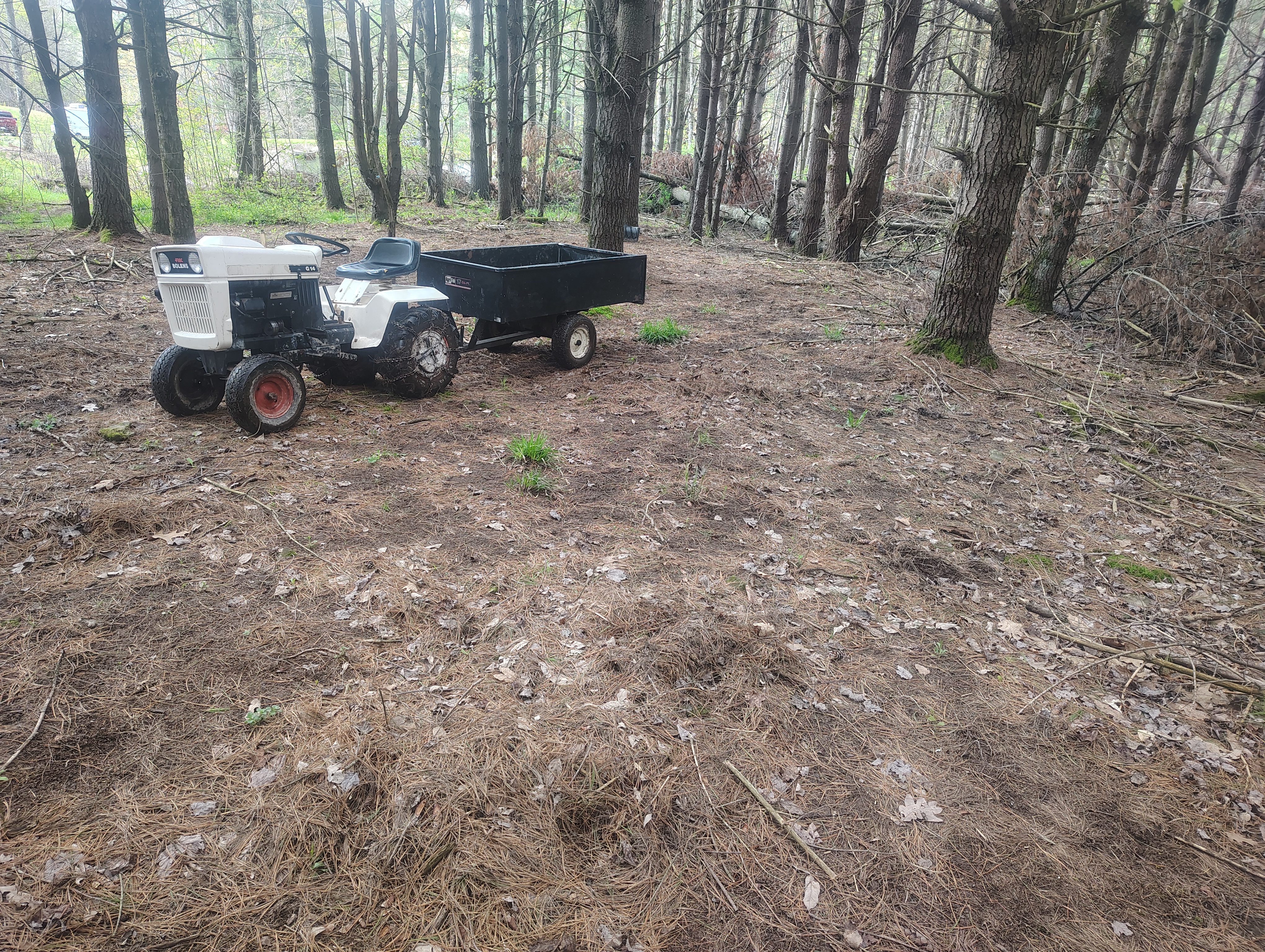
The tiller and mower deck aren’t the only uses, however. Most commonly, I found myself using it to tow around a lawn wagon loaded with everything from mulch to blueberry bushes. I could often navigate the tractor and trailer into tight areas where a larger bucket tractor couldn’t go. A common example was the thickly wooded pine forest on the edge of our property, where I frequently retrieve loads of fallen pine needles. As a side note, if you can learn to back up one of those lawn trailers, you can learn to back up anything!
By the time winter rolled around, I was already satisfied with my acquisition, but there was one application left to test. Snow removal is often handled with a larger tractor around here, which is fine on the driveway but no good for the lawn. So naturally, I was excited to test out the snowblower. My opportunity came when a weekend snowstorm popped up in the forecast. I hooked up the snowblower a few days before, checked the gearbox for oil, and hoped for the best. The results were… mixed.
The Bolens had always struggled with traction on wet ground or when backing a trailer with any amount of weight. We fitted the rear/drive wheels with wheel weights and chains in an attempt to make up for the tractor’s light weight. That improved things to a certain extent, but the tractor still tended to spin tires from time to time. On the day of the snowstorm, however, the tractor’s weakness reared its ugly head worse than ever before. Due to some unforeseen mechanical issues, I wasn’t able to get the tractor going until several inches of snow had fallen. When I did get out there, I had an issue immediately. Almost as soon as I pulled out into snow, I was stuck. I spent a couple hours in a cycle of rocking the tractor, getting off to push, backing up, and occasionally blowing snow.
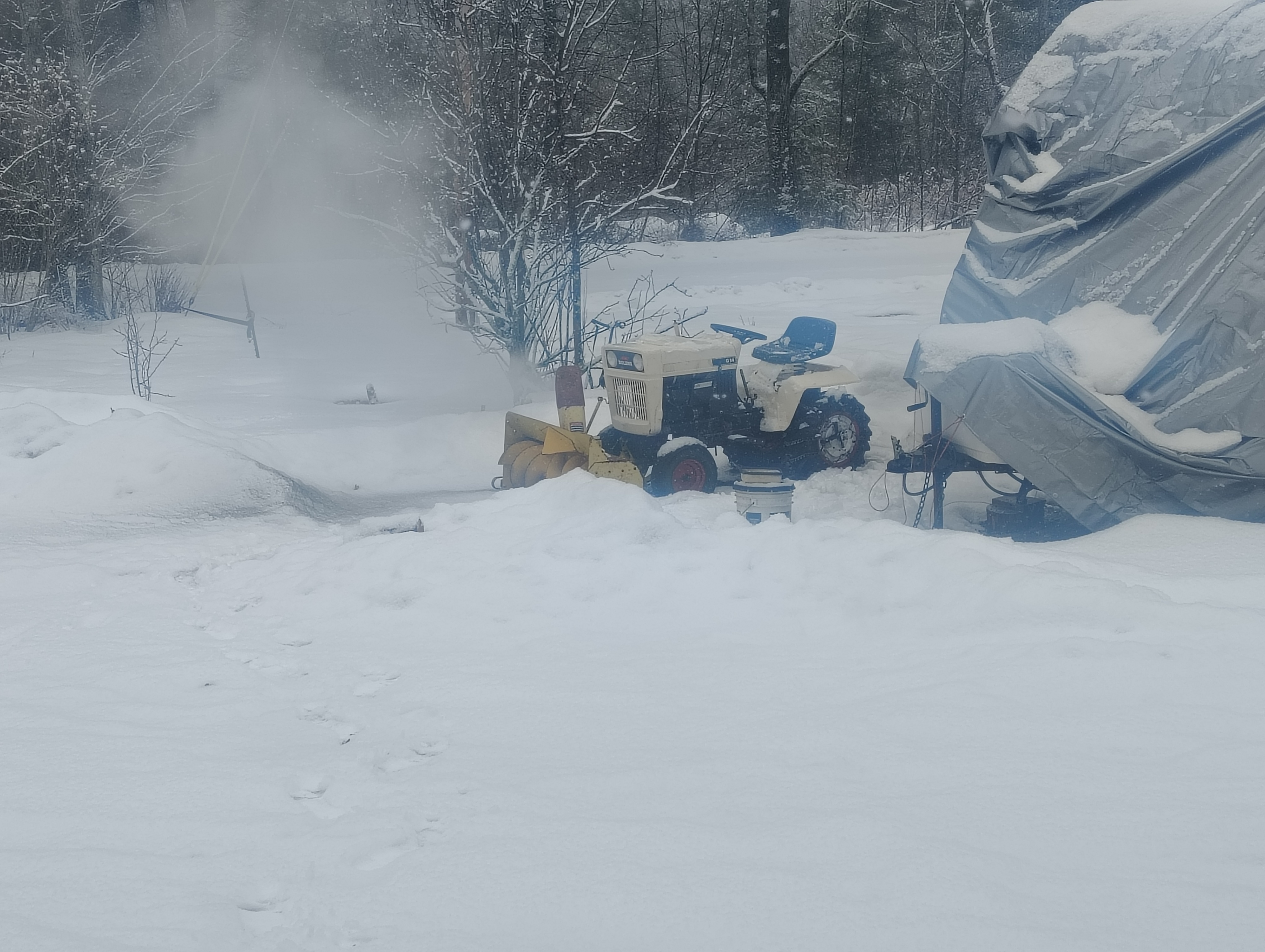
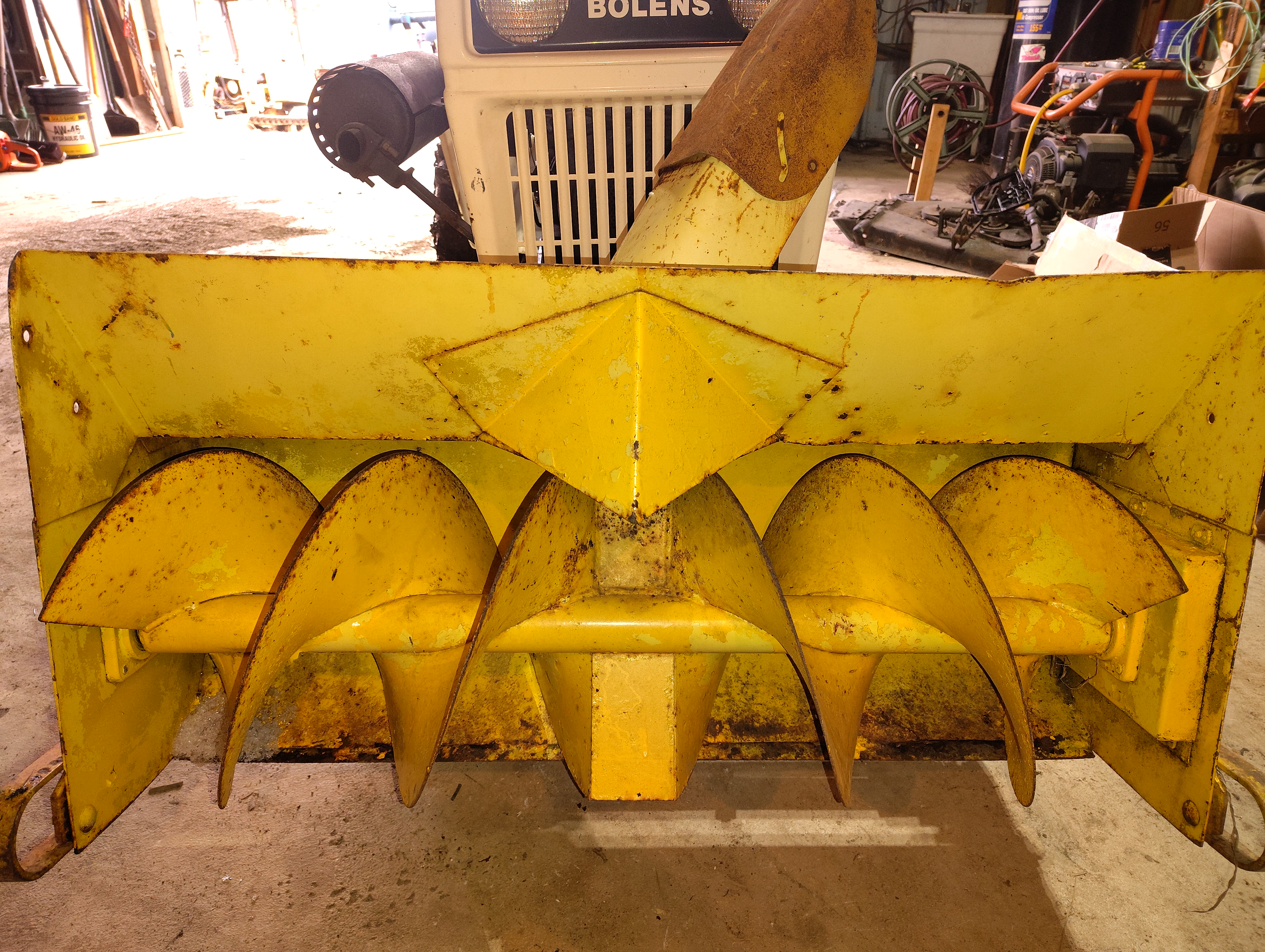
Now, to be fair to the tractor, it would probably do just fine on a flat driveway. Most of the lawn I was trying to clear is on an incline, and I was headed uphill. At times, I would get a good start, with the blower clearing a path for the tractor as I went. Then I’d hit a slightly steeper section of the lawn, and the tractor would begin slipping. A second later, I’d be spinning in place. It was the perfect storm of wet/snowy ground, a light tractor, and the front-mounted snowblower pulling up on the rear end. Could a rear-mounted counterweight of some sort solve the problem next year? Potentially. As for the blower itself? It did about as well as can be expected for a single-stage blower. I tested it out during a few lighter snows and actually found that it works best when the snow is thick; a light layer seems to slowly build up inside the schute and ultimately cause a clog. Meanwhile, a thicker layer of snow seems to provide enough material being forced through the schute to keep things moving.
In Summary…
At the end of the day, do you need a lawn tractor? Maybe—they are certainly a lot of fun. If you have need to do a lot of hauling materials back and forth on a lawn you can’t afford to tear up, a garden tractor could be just the ticket. Find one with a few attachments like mine, and you might be able to maintain that lawn, your garden, and maybe even your driveway. And for the cost compared to a larger machine, they’re certainly worth a try.

Leave a Reply